The field of holographic communication has long been the stuff of science fiction, promising immersive, real-time interactions that transcend physical boundaries. Yet, despite decades of research, the technology has struggled to break free from the confines of laboratories and niche applications. Recent breakthroughs, however, suggest that the era of practical holographic communication may finally be within reach. Engineers and researchers are tackling longstanding bottlenecks with innovative solutions, pushing the boundaries of what was once considered impossible.
Bandwidth and Latency: The Achilles' Heel of Real-Time Holography
One of the most formidable challenges in holographic communication has been the staggering amount of data required to transmit high-resolution holograms in real time. Traditional video streams pale in comparison to the computational and bandwidth demands of dynamic holography. Early attempts often resulted in laggy, low-fidelity projections that were more frustrating than functional. However, advancements in compression algorithms and edge computing are beginning to turn the tide. By leveraging machine learning to predict and interpolate holographic frames, researchers have managed to reduce data loads by orders of magnitude without sacrificing visual quality.
The Display Dilemma: From Bulky Prototypes to Consumer-Ready Solutions
Even if data could be transmitted flawlessly, displaying holograms has remained a stubborn obstacle. Most existing systems rely on complex arrays of lasers, spatial light modulators, or vibrating mirrors—hardly practical for everyday use. A new wave of metasurface optics and nanophotonic devices is changing the game. These ultra-thin, tunable materials can manipulate light at unprecedented scales, enabling compact holographic displays that could eventually integrate into smartphones or eyewear. Startups are already demoing prototypes that project lifelike holograms from devices no larger than a coffee mug.
Content Creation: The Silent Bottleneck
Producing holographic content has been another roadblock. Unlike conventional media, holograms require depth information that standard cameras don’t capture. The emergence of light-field cameras and computational imaging techniques is addressing this gap. Some systems now use AI to convert 2D footage into plausible 3D holograms, while others employ multi-camera rigs to reconstruct scenes with photorealistic depth. As these tools become more accessible, we’re seeing the first signs of a holographic content ecosystem—from telepresence avatars to interactive educational models.
Power Consumption: The Overlooked Showstopper
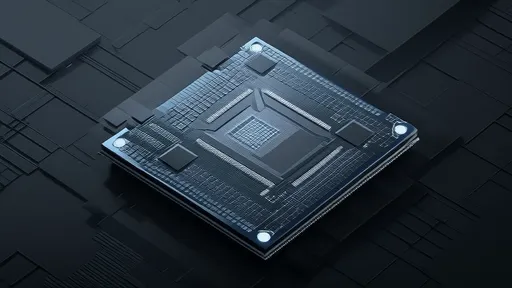
Few discuss the energy appetite of holographic systems, yet it’s critical for scalability. Generating and tracking interference patterns demands significant processing power, especially for mobile applications. Recent strides in photonic integrated circuits (PICs) and energy-efficient laser diodes are making headway. Some labs have demonstrated holographic projections consuming less power than a modern LED display—a milestone that could pave the way for always-on holographic interfaces.
Standardization Wars: The Battle for the Holographic Future
Behind the technical hurdles lies a subtler challenge: the lack of universal standards. Competing formats and proprietary systems threaten to fragment the industry before it matures. Consortiums are now racing to establish protocols for holographic data exchange, display compatibility, and compression. The outcome of these efforts will determine whether holography becomes an open platform like the web or a walled garden controlled by a few tech giants.
The convergence of these advancements suggests that holographic communication’s "impossible" phase may soon end. While challenges remain, the trajectory is clear—we’re moving toward a world where projecting oneself across continents will be as routine as a phone call. The implications for healthcare, education, and social interaction are profound. As one researcher quipped, "We’re not just breaking technical barriers; we’re redesigning human presence."

By /Jul 11, 2025

By /Jul 11, 2025

By /Jul 11, 2025

By /Jul 11, 2025

By /Jul 11, 2025

By /Jul 11, 2025

By /Jul 11, 2025

By /Jul 11, 2025

By /Jul 11, 2025

By /Jul 11, 2025

By /Jul 11, 2025

By /Jul 11, 2025

By /Jul 11, 2025

By /Jul 11, 2025

By /Jul 11, 2025
By /Jul 11, 2025

By /Jul 11, 2025
By /Jul 11, 2025